Sharon’s Story
With spinal cord stimulation
Sharon can overcome her pain and enjoy life again
Now a cheerful 54-year-old grandmother living in Victoria, Sharon King has been through a years-long journey to get her life back. In 2017 she was fit, healthy and active, she enjoyed horse riding and spending time with her family until an injury at work left her with chronic, life-limiting pain.
“Shooting pains
down my leg”
Sharon was working in aged care and was moving a resident one day when she felt “a little niggle” in her back, it wasn’t until later she realised something was wrong.
“I was moving a resident who couldn’t walk. I leaned over and pulled her forward, but she resisted a bit and that was enough. I felt a little niggle but it wasn’t until a couple of hours later when I had shooting pains in my leg that I really thought something was wrong. I could hardly walk by the end of my shift and had to go home to bed.”
Sharon later awoke at midnight in excruciating pain and went to hospital where she was monitored for several hours, given medication and sent home.
“I collapsed on the way out of the hospital and needed a wheelchair to get to the car,” she said.
For chronic pain, finding the cause isn’t always a cure. Sharon saw her GP who ordered medical imaging, her scans showed she had two protruding discs and a pinched nerve. She had surgery to release the nerve which gave her some relief and meant she no longer needed a crutch to walk. However, she was still in a lot of pain day to day; “It was terrible, I lived on pain killers. ”During this time Sharon could only work part time and struggled to do daily activities, and to enjoy any social time or hobbies. “I couldn’t do anything, I would just lie on the couch most of time. I couldn’t socialise, couldn’t clean the house properly. I would vacuum for 5 minutes then have to sit down. I’d have to keep doing 5 minutes at a time until the whole house was done. Friends and family knew I couldn’t sit or stand for a long time, but I never let on I was in that much pain.” Like many patients with chronic pain, Sharon tried everything. She used a range of different treatments to try to get in control of her pain. She saw her GP every month and for a time was seeing her chiropractor weekly, she remained on daily pain medication. She completed a pain management course and followed all the advice she was given, but she was still experiencing the debilitating effects of chronic pain, both physically and mentally, in her daily life. The pain caused her to change how she moved, favouring one side when she walked, and meant that she lost several centimetres around her left thigh as she was using her right leg much more.
A pain specialist opens the door
to the right treatment
Three years after the initial injury Sharon was referred to a Specialist Pain Medicine Physician and things began to get better.
Sharon’s pain specialist tried some new therapy options such as cortisone injections to try and reduce her pain, trying the least invasive options first. As she wasn’t experiencing relief, he suggested spinal cord stimulation.
When her doctor told her about spinal cord stimulation, Sharon was enthusiastic; “I was excited, I told him, ‘I’ll try anything’!”
The therapy uses leads placed surgically in the spine that attach to a device called an Implantable Pulse Generator (IPG) which is implanted under the skin. The IPG, through the leads, delivers electrical pulses that disrupt the pain signals to the brain and the therapy is controlled by the patient using an Apple iPod controller.
People using spinal cord stimulation now also have the option to have their device programmed remotely once it has been implanted. This means they no longer need to attend a clinic every time their device needs to be reprogrammed by their doctor.
Sharon was thoroughly assessed by a multidisciplinary team, including physical and psychological evaluations, and she underwent a trial of the therapy to check if it would work for her.
The trial went well; “I didn’t want them to take it out,” said Sharon “it was a relief when they finally put the permanent one in.”
Her recovery from surgery took around six weeks although she was able to perform many daily activities whilst recovering, as long as she was careful of the surgical site.
Getting her life back
with spinal cord stimulation
“I have a program on there for work and I turn it up when I need it. It’s brilliant, you can adjust it to your needs, although I don’t need to adjust very often,” said Sharon, who now also uses the virtual clinic technology to consult with her doctor and have her device programmed at home. This means she can avoid a forty-minute drive to attend her appointments in person.
Although Sharon is not pain free, she says the pain is drastically reduced and the sensation is easily manageable now. “Now it’s more like a dull ache, it’s an everyday type of pain, and if I need to, I can turn up the stimulation,” she said.
“I never wanted to be on painkillers,” said Sharon who is much happier now that she no longer needs to take pain medication during the day, and only takes a low dose at night.
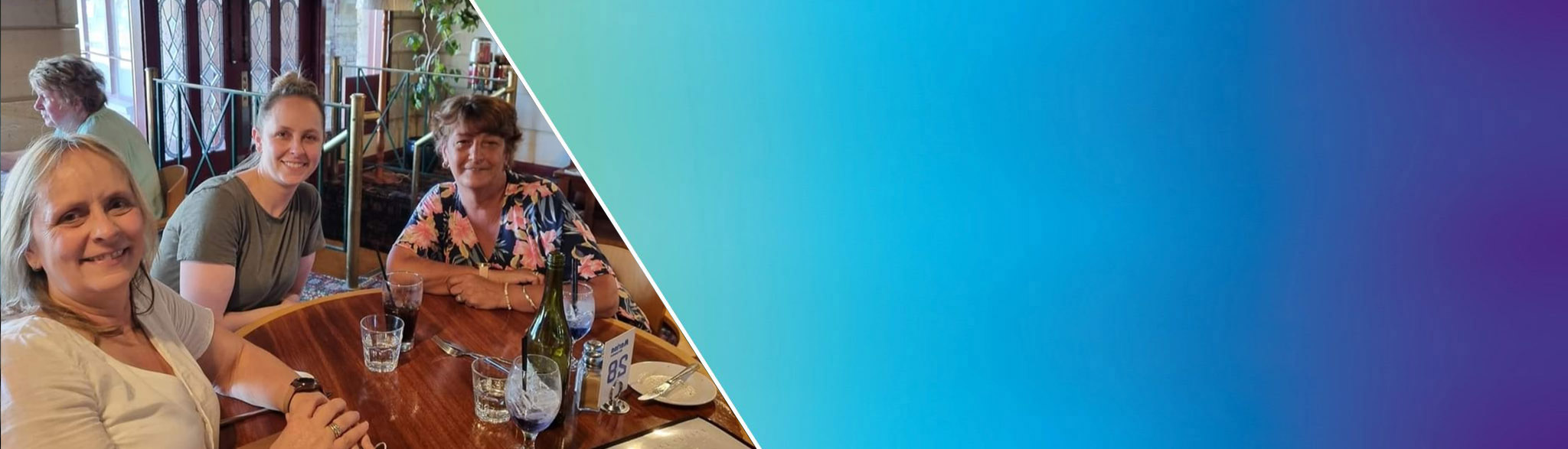
Housework and daily chores are no longer a problem, and Sharon is now working full time. She can go out for drinks with friends and enjoys going to football games to support her team, the Richmond Tigers, which she couldn’t have done before having spinal cord stimulation.
“I won’t get back to playing netball again, because I’m a bit old now, but everything else is great!” she said.
Sharon can now run around with her grandchildren and hopes that others in her situation will consider spinal cord stimulation therapy, “Just go for it, get your life back!” she said.