WHAT IS
NEUROMODULATION?
THE FACTS ON
NEUROMODULATION
Neuromodulation is technology that acts directly upon nerves. It is the alteration—or modulation—of nerve activity by delivering electrical or pharmaceutical agents directly to a target area.
Neuromodulation devices and treatments are life changing. They affect every area of the body and treat nearly every disease or symptom from headaches to tremors to spinal cord damage to urinary incontinence.
Neuromodulation works by either actively stimulating nerves to produce a natural biological response or by applying targeted pharmaceutical agents in tiny doses directly to site of action.
Neurostimulation devices involve the application of electrodes to the spinal cord, dorsal root ganglion or peripheral nerves. These precisely placed leads connect to a pulse generator and power source, which generates the necessary electrical stimulation. A low-voltage electrical current passes from the generator to the nerve, and can either inhibit pain signals or stimulate neural impulses where they were previously absent.1
CLINIC LOCATOR
Find a Pain Practice near you and learn more about treatment options for managing your chronic pain.
SPINAL CORD
STIMULATION (SCS)
First used to treat pain in 1967, spinal cord stimulation (SCS) is a proven, safe and effective therapy that has been used for over 50 years to manage chronic and improve quality of life. With SCS, a small device is used to interrupt pain signals before they reach the brain. The painful feeling is replaced with a different feeling – which some describe as a gentle massaging sensation or, in some cases, simply the absence of pain. Unlike many options for managing chronic pain, you have the opportunity to try SCS before making a commitment in order to make sure it is the right option for you.
SCS is suitable for the management of chronic, intractable pain of the trunk and/or limbs, including unilateral or bilateral pain. A careful assessment by a multidisciplinary team, and discussion of the patient’s expectations and goals, will help identify appropriate candidates for spinal cord stimulation. Some chronic pain conditions indicated include:
- Failed back surgery syndrome – persistent spinal and limb pain
- Refractory angina pectoris
- Neuropathic pain secondary to peripheral nerve lesion
- Radicular pain following cervical spine surgery
- Peripheral neuropathic pain syndromes that may have been caused by trauma
- Complex regional pain syndrome
Benefits of SCS include:
- An effective method of pain control for many patients when used as directed
- May reduce the need for pain medications
- Less invasive than surgical alternative
- Reversible – can be discontinued or surgically removed if desired by the patient
- Systems reprogrammable without surgery
- Trial helps assess patient response
- Patient control within preprogrammed limits
DORSAL ROOT GANGLION
(DRG) THERAPY
Dorsal root ganglion (DRG) therapy is a novel neurostimulation technology that targets and relieves pain at the source. Traditional neurostimulation has been used safely for decades, but it doesn’t always work for people with focal neuropathic pain.2
DRG systems can utilize recharge-free technology, relieving you from the time and hassles of recharging, unlike rechargeable neurostimulation systems that require frequent charging sessions. By focusing electrical stimulation specifically on the dorsal root ganglion, a DRG system will work to interrupt pain signals before they reach the spinal cord, so you don’t feel pain in the same way. Interrupting these pain signals enables the use of low energy levels on a recharge-free platform and helps eliminate unnecessary stimulation throughout the body, unlike spinal cord stimulation (SCS) sytems.2
HOW NEUROSTIMULATION
WORKS
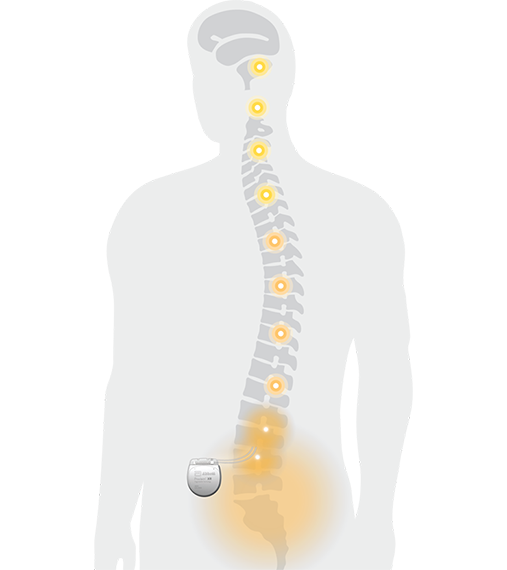
- Pain signals travel up the spinal cord to the brain.
- A generator sends pulses to a thin wire called a “lead.”
- The lead delivers these pulses to nerves along the spinal cord.
- The pulses block pain signals before they reach the brain.
- The painful feeling is replaced with more comfortable sensations, or nothing at all.
TRY IT FIRST WITH
AN INVISIBLE TRIAL SYSTEM

TEMPORARY LEAD
The process begins with a short procedure which may be a day procedure. During this time, your doctor will place thin wires, called leads that deliver the low-energy electrical pulses that interrupt your pain signals. The leads will be connected to a small external battery.

EXTERNAL BATTERY
During the evaluation, the battery will be worn outside of the body, typically on your lower back. In the recovery room, your Abbott representative will program your system under your doctor’s guidance.
PATIENT CONTROLLER
The evaluation will give you an opportunity to see how well the therapy controls your pain throughout the day and during different activities. The typical evaluation period lasts seven to ten days, after which you and your doctor will decide if it is right for you.
HAVE A SUCCESSFUL EVALUATION?
TAKE THE LIFE-CHANGING NEXT STEP.
The next step is to have a SCS system implanted in a surgical procedure that is usually completed on an outpatient basis. Much like the temporary system, the three basic components of the implanted system will be familiar to you.
LEADS
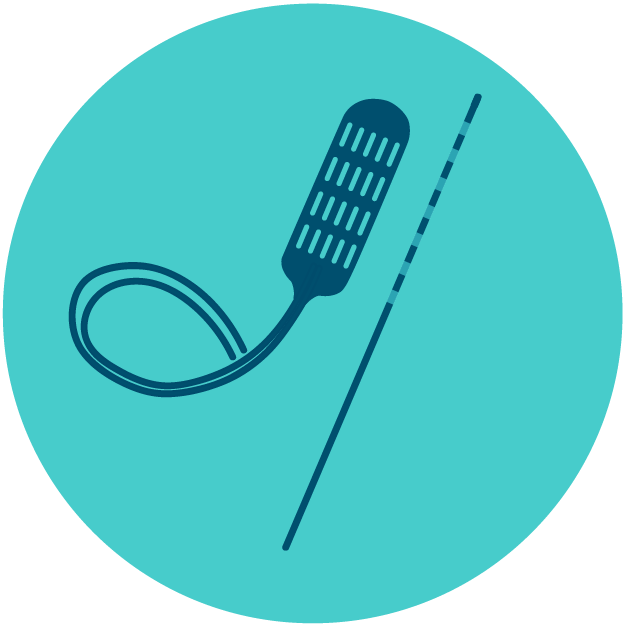
Thin wires that deliver electrical pulses from the battery to nerves along the spinal cord.
IMPLANTED BATTERY
A small device typically implanted in the abdomen or buttock area, that is connected to the leads.
PATIENT CONTROLLER
A handheld device similar to a remote control that enables you to adjust the therapy.
RESTRICTIONS
Before the procedure, you and your doctor should review any possible complications as well as the restrictions you will be asked to follow during your recovery for the long term. As a general rule, it’s important to restrict the amount of bending, twisting and reaching for the first six to eight weeks after surgery so the area around the leads can heal. Permanent restrictions include no diathermy therapy. A doctor will discuss a complete list of restrictions. Certain activities can cause the lead or leads to move and cause an unwanted change in stimulation. In general, you should be able to perform your daily activities with less pain over time.
REFERENCES
1. International Neuromodulation Society 2018, neuromodulation.com, accessed 28 May 2021, <https://www.neuromodulation.com/about-neuromodulation>